

Ahrefs was the first SEO tool I ever used for digital marketing. This goes all the way back to 2015, when I was just getting started. Since then, they’ve added many new features, but honestly, the look and feel of the tool hasn’t changed much.
Ahrefs has also kept my favorite report—Top Pages. It shows the top organic pages for any site. I use it to track the top-ranking pages on my site and spy on competitors.
For years, Ahrefs has been a top choice for SEO professionals. It’s focused on SEO features, unlike Semrush, which is an all-in-one tool for an entire online marketing team.
I’ve recently come across some newer Ahrefs alternatives for SEO experts you might not know about yet, like Search Atlas (I’ll tell you more about it in a bit).
I stopped using Ahrefs Lite after their team introduced a credit system. I remember consuming credits quickly, and I had to pay extra to continue using the tool. I wasn’t happy with the new payment plans, since I could never predict how much their SEO suit would cost me per month.
In September 2024, Ahrefs launched a Starter plan for just $29. It’s a limited, but more affordable version of their paid plans for small site owners or someone who’s just getting started. I use the Starter plan for everything related to my website’s organic performance.
I’ve noticed a few issues with the Ahrefs data lately. In my experience, Ahrefs often shows way more organic traffic than what I actually see in Google Search Console or Analytics. Tools like Semrush and SE Ranking provide a more accurate organic traffic estimate.
So, if you’re looking for the best Ahrefs alternatives that are affordable and offer solid data, I’ve got a few great options to share, the ones I’ve actually used myself.
Before we dive in, here’s what I paid attention to when comparing them:
- Data reliability
- Pricing
- User experience
My top 5 Ahrefs alternatives
Based on the criteria that I shared above, I’ve picked a few SEO tools that I believe are the best alternatives to Ahrefs.
Let me provide a brief overview of each tool to help you gain a better understanding.
- Semrush SEO Toolkit – Has more accurate data than Ahrefs and over 55 SEO features. If you are looking for an SEO + AI search visibility toolkit, Semrush has recently launched Semrush One. It’s an AI SEO tool that combines two toolkits under one subscription.
- Search Atlas — An affordable alternative to Ahrefs that offers an AI SEO solution for agencies.
- SERanking — SEO software for agencies with an AI Overviews tracker.
- Writesonic — An AI-powered SEO agent for all SEO, content writing, and generative engine optimization (GEO) tasks.
- Ubersuggest — My top SEO pick for hobbyists and small site owners.
P.S. This post contains a few affiliate links. If you choose to use any of these tools, I may earn a small commission at no extra cost to you. I’m sharing this because I believe in being transparent. Whether or not you use these links, I genuinely support these tools as I’ve personally used all of them. 
1. Semrush SEO Toolkit
- Unique features: AI assistant providing personalized data for your domain, AI brand insights
- Pricing: Starts at $139/month for the Semrush Pro plan. Semrush One, which combines traditional SEO + AI search solution, starts at $199/month.
- Free trial: Semrush SEO Toolkit has a free version where you can conduct 10 free searches daily. But you can also sign up for a 14-day free trial. You can also test Semrush One for free for 14 days using my partner link.
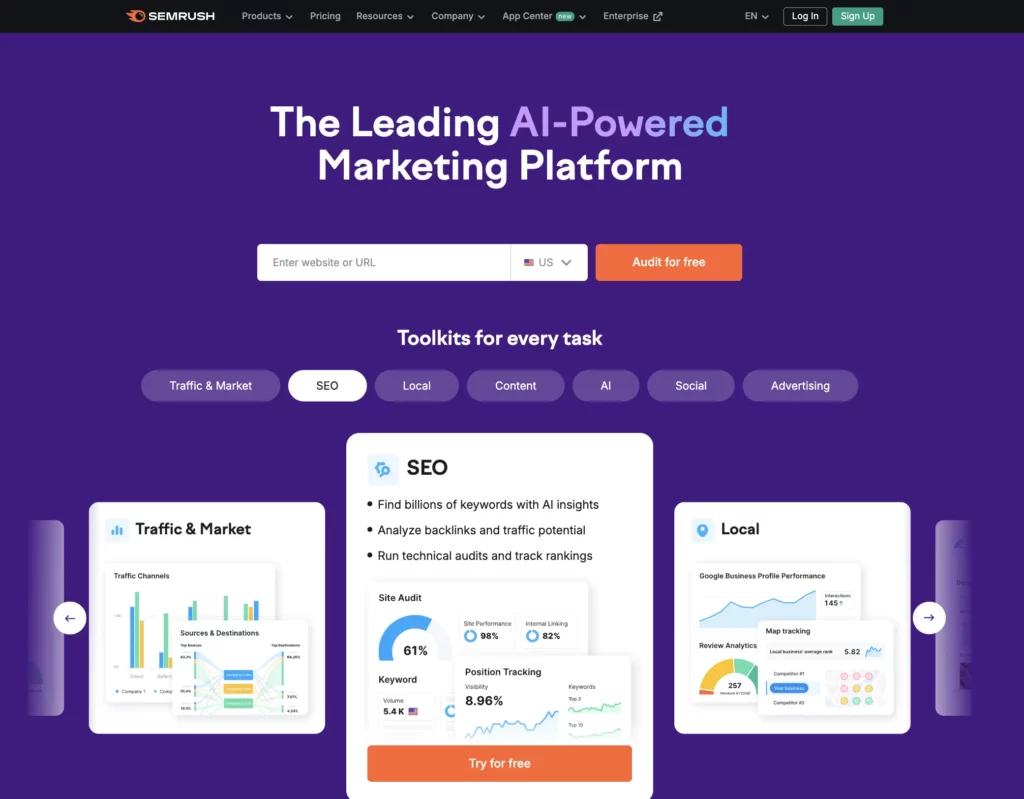
Semrush is one of the most popular Ahrefs alternatives that has been around since 2008.
Today, it offers 55 different tools for online marketers.
On top of the core SEO Toolkit, Semrush also gives you access to several add-on toolkits, depending on what you need.
These extras typically come with a 7-day free trial but incur additional costs on top of your regular SEO Toolkit subscription. Here’s a quick rundown:
- Content Toolkit (formerly ContentShake AI) to help you optimize your content production process
- AI Visibility Toolkit to help you track your brand’s performance in AI search results
- Social Media Kit helps with social media management across different platforms
- Advertising Toolkit to research, plan, launch, and optimize online ad campaigns
- Local Business Kit to manage your Google Business Profile and online reviews
- Traffic and Market Insights to find what works for your competitors and how they grow
- Semrush One brings together two toolkits in one plan, giving you all the data, insights, and tools you need to succeed in search on both search engines and AI chat platforms.

It’s a pretty robust platform if you’re handling multiple parts of your online marketing in one place.
For this article, I’ll mainly talk about Semrush’s SEO and AI Toolkits, since they are solid alternatives to Ahrefs I’d recommend trying.
Just like Ahrefs, I’ve been familiar with Semrush since 2015 and used it occasionally.
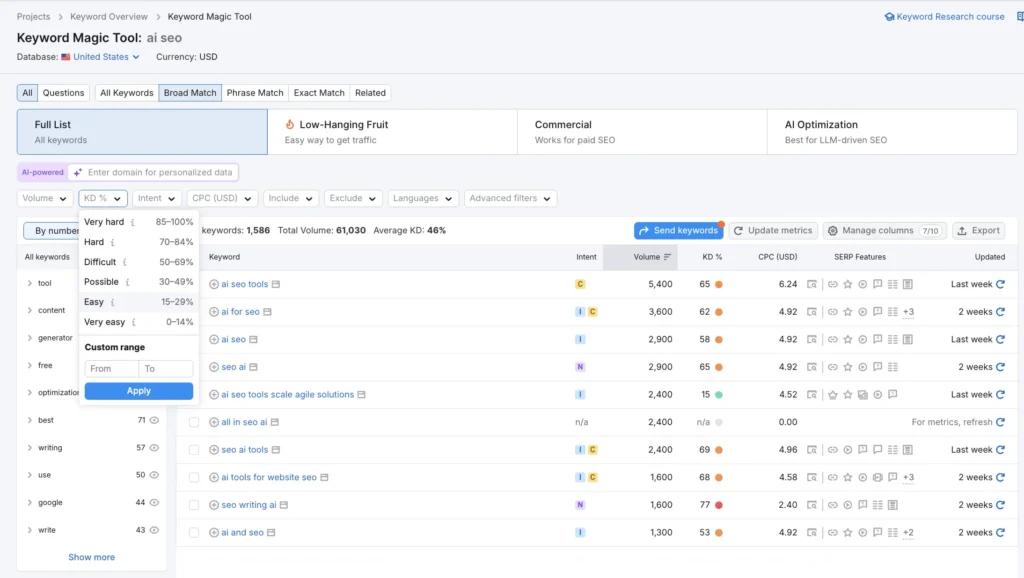
One feature that makes me choose Semrush over Ahrefs is the Keyword Magic Tool. As an SEO specialist and a content writer, I frequently conduct keyword research for both my site and my clients. And for that, I need robust tools.
Keyword Magic Tool lets you pull up thousands of keyword ideas from just one seed keyword. It’s super efficient. Plus, their filters can help you quickly narrow the keyword list down. I can find keywords that are realistic to target and have business value.
Also, Semrush has introduced a unique feature — a personal AI assistant. It gives you keyword suggestions based on your website’s domain authority, so you’re not just guessing what you can rank for. It’s a very helpful feature.
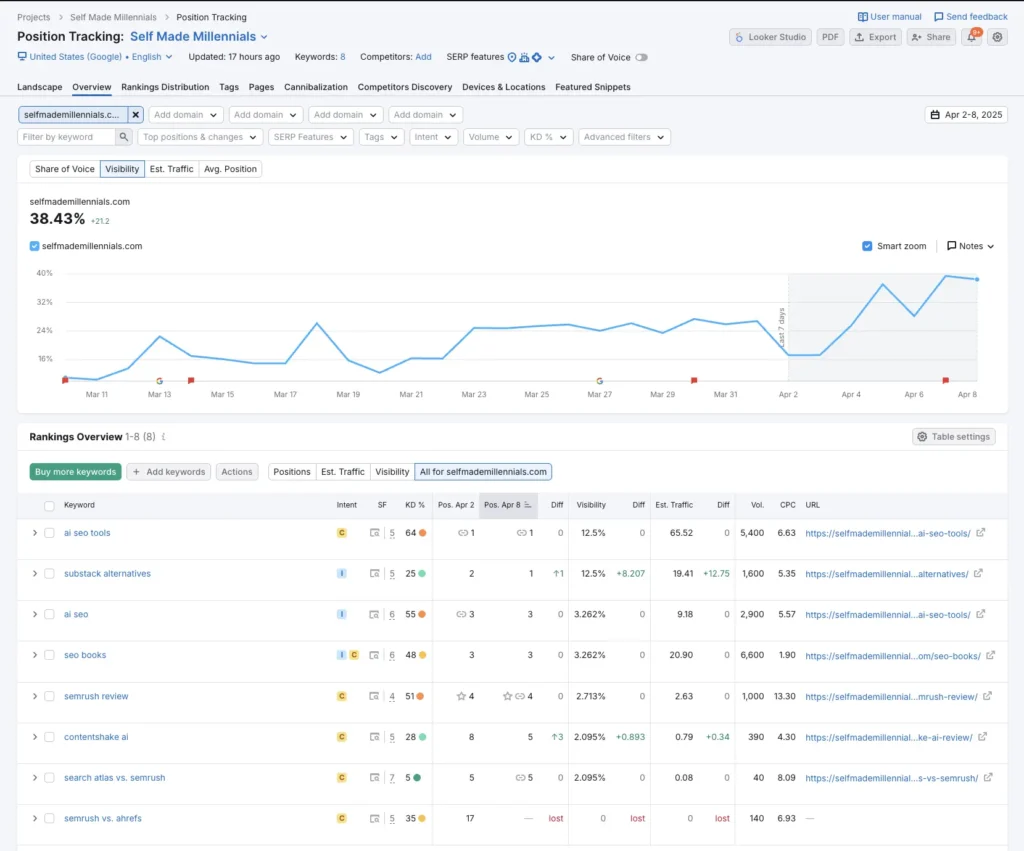
I’ve also been positively impressed by Semrush’s Position Tracker tool, which detected keyword ranking changes faster than Ahrefs (in my case).
Right now, I’m using Semrush’s free plan. It lets you track up to 8 keywords. I use it to keep an eye on my top keywords and compare results with Ahrefs and Ubersuggest (I’ve got a lifetime deal on that one).
Here’s what I like about Semrush’s Position Tracking tool:
- It updates keyword rankings every day
- You get a visibility chart to see how you’re doing over time
- It shows when you add or remove keywords
- You can compare keyword performance weekly, monthly, quarterly, or yearly
- It even emails you regular performance reports
Below is a sample rank tracking report for my site. If you upgrade to Semrush Pro, you can track up to 500 keywords across 5 domains.
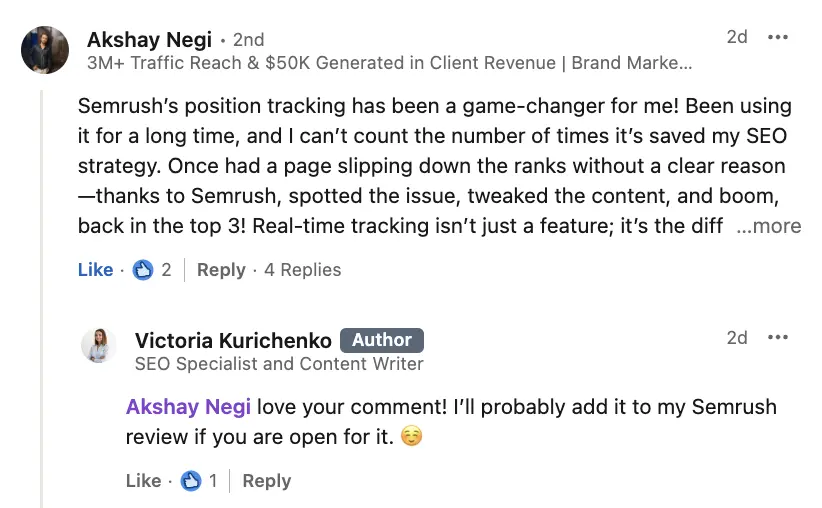
Here’s what Akshay Negi, a brand marketing expert, says about using Semrush’s Position Tracking tool to boost his online business:
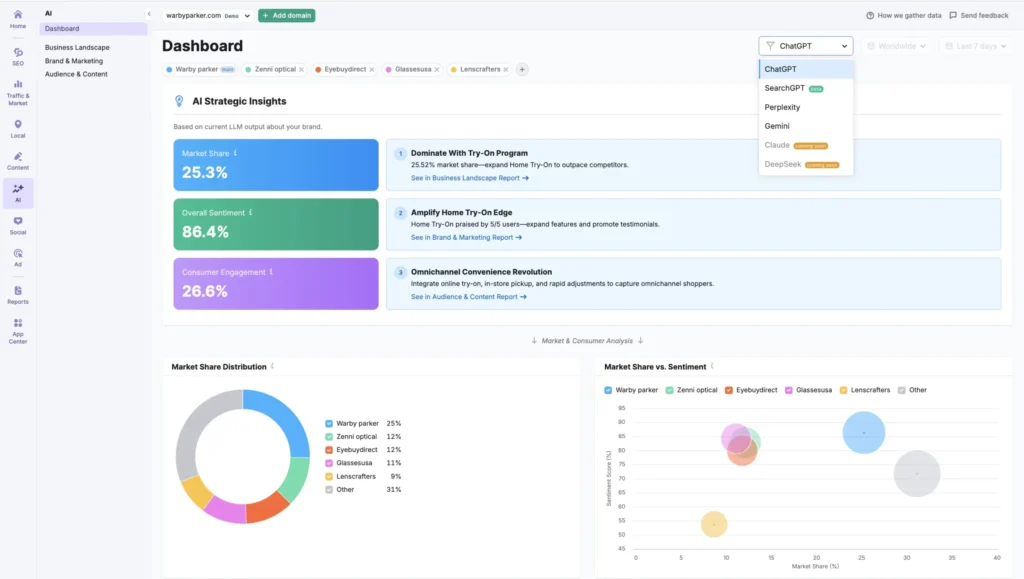
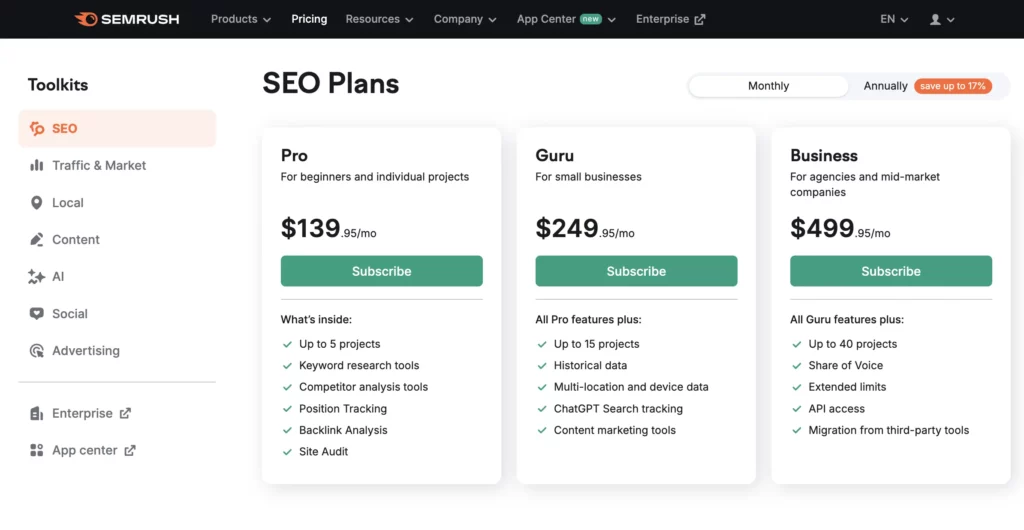
Note that tracking your domain’s visibility in ChatGPT is only available for Semrush’s Guru ($249.95 monthly) and Semrush Business ($499.95) users.
If you want to dive deeper into how LLMs see your brand, I recommend checking Semrush’s AI Toolkit. It lets you analyze your company’s presence across AI platforms like ChatGPT, SearchGPT, Gemini, and Perplexity.
Comparing Semrush and Ahrefs organic performance data
I shared my detailed comparison of both tools in my Semrush vs. Ahrefs post, but I’d like to help you better understand how the data accuracy of both tools compares.
Here’s a quick look at my website’s SEO metrics from October 2025:
| Category | Semrush | Ahrefs | Google Search Console |
|---|---|---|---|
| Organic traffic | 15,100 | 47,400 | 8,000 |
| Top 3 pages based on organic traffic | AI SEO tools Ahrefs alternatives AI marketing tools | AI SEO tools Ahrefs alternatives AI marketing tools | AI SEO tools AI marketing tools Ahrefs alternatives |
| Organic traffic estimate for the top-ranking page | 6,000 | 15,237 | 3,570 |
| Number of keywords | 3,800 | 3,350 | |
| Referring domains | 604 | 453 | |
| Number of backlinks | 2,000 | 1,300 |
It’s worth mentioning that Ahrefs’ overall keyword database is bigger (as of July 2025), but Semrush provides more keyword variations for the USA if that’s your target location.
- Semrush keyword database: 27.2 billion keywords in 142 locations, 3.7 billion keywords in the USA alone
- Ahrefs keyword database: 28.7 billion keywords in 217 locations, 2.4 billion keywords in the USA alone
What this means for you is that Ahrefs will potentially be able to identify and show you more keyword opportunities. However, Semrush can offer you more keyword opportunities specifically for the USA.
These numbers can change anytime since both tools always update their databases. That’s why I’ll be checking Ahrefs’ Keyword Explorer page and Semrush’s stats occasionally to keep my article up to date.
You can learn more about the tool in my Semrush review.
Semrush offers a 7-day money-back guarantee if you upgrade to a paid plan but don’t want to keep it for some reason.
I once upgraded to the Semrush Pro plan by mistake, which cost me $139.95. I reached out to their support, and they gave me my money back within a few days.
Just send them a request within 7 days of signing up, and they’ll refund you. It’s that simple.
If you’ve been thinking about trying Semrush Pro, here’s a little perk—my partner link gives you a 14-day free trial to Semrush Pro instead of the usual 7 days. Just a small way to get more time to explore and see if it’s a good fit! 
2. Search Atlas
- Unique features: OTTO SEO AI tool, Site Visualization, Keyword Magic Tool
- Pricing: Starts at $99/month for the Starter plan
- Free trial: There’s a 7-day free trial. If you want to keep using the tool, you’ll have to upgrade to a paid plan after the free trial expires
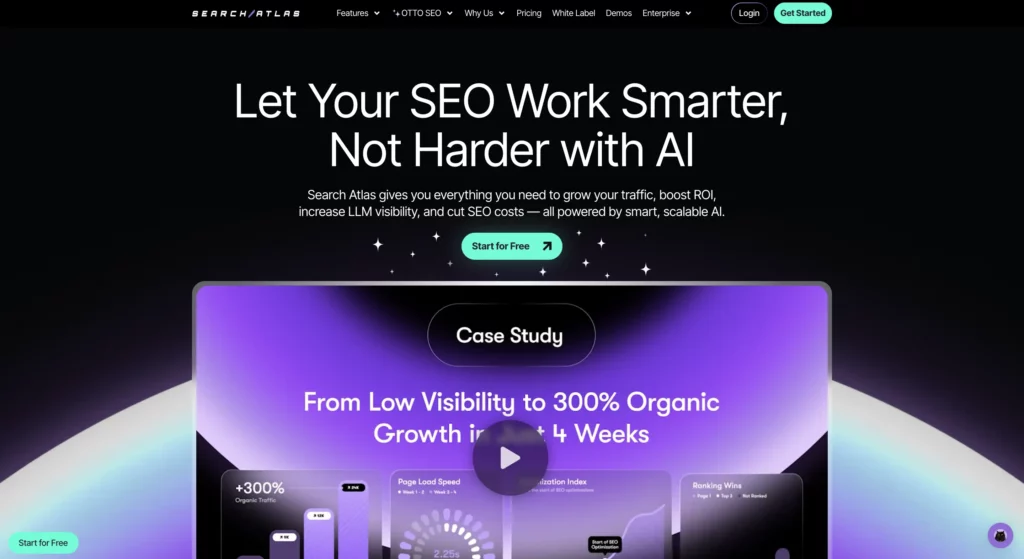
Search Atlas is a powerful SEO software for agencies with an automated AI SEO assistant, called OTTO SEO.
I first came across it on social media. Honestly, I kept seeing its ads everywhere. I shared the full story in my Semrush vs. Search Atlas review.
After that, I got curious. I wanted to see if it could be a more affordable alternative to Ahrefs and what it actually offers.
To me, Search Atlas feels like a mix of Semrush and Ahrefs. It has features like both and a similar layout. If you’ve used either of those tools before, Search Atlas will feel pretty familiar.
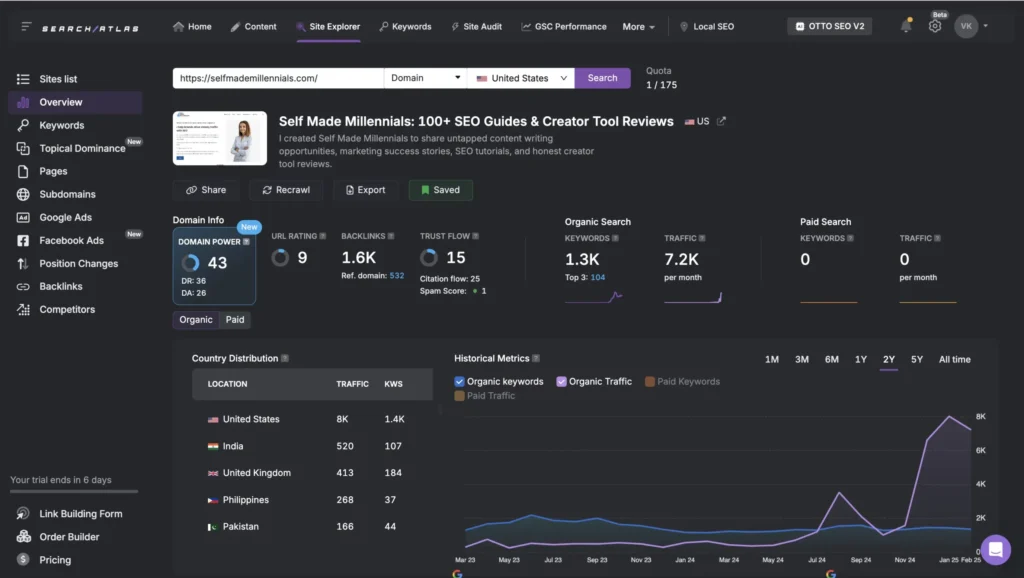
Here’s a quick look at the Site Overview report inside Search Atlas. It looks a lot like what you’d see in Ahrefs or Semrush.
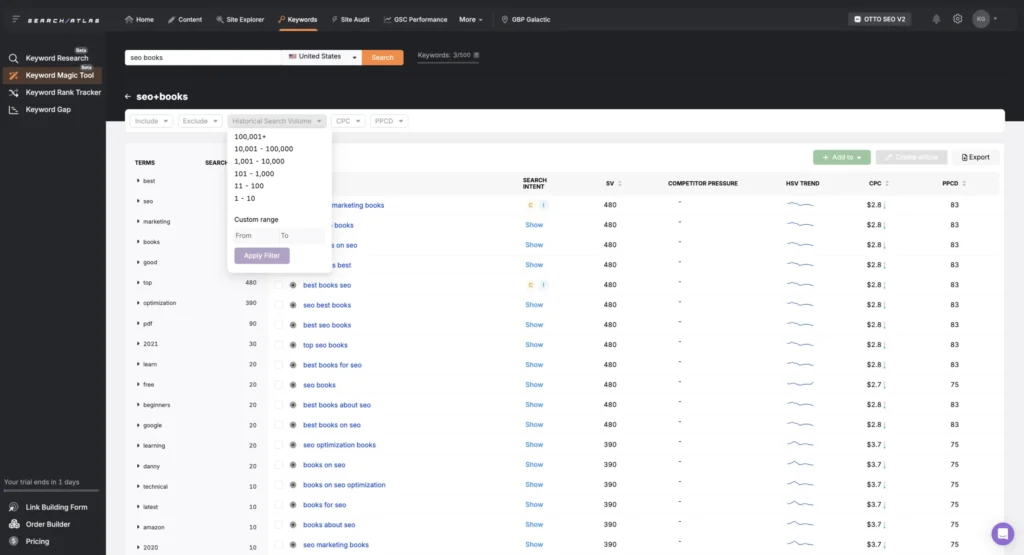
Search Atlas has a Keyword Magic Tool, just like Semrush. You can use it to get keyword ideas from your seed keyword. It even has the same name as Semrush’s tool. Semrush gives you a few more filter options, but honestly, I don’t think it’s a big deal. Ahrefs doesn’t have this kind of tool at all.
I’ve also published an in-depth Search Atlas review recently to help you get a detailed overview of the tool’s features and data accuracy.
Now, let me quickly show you how Ahrefs and Search Atlas compare in terms of data accuracy. It’s seriously my favorite thing to do – testing and comparing tools’ data accuracy.
Here’s the data comparison for my website from October 2025:
| Category | Search Atlas | Ahrefs | Google Search Console |
|---|---|---|---|
| Organic traffic | 13,500 | 47,400 | 8,000 |
| Top 3 pages based on organic traffic | AI SEO tools, AI marketing tools, Ahrefs alternatives | AI SEO tools, Ahrefs alternatives, AI marketing tools | AI SEO tools, AI marketing tools, Ahrefs alternatives |
| Organic traffic estimate for the top-ranking page | 4,500 | 15,237 | 3,570 |
| Number of keywords | 3,800 | 3,350 | |
| Referring domains | 668 | 453 | |
| Number of backlinks | 2,000 | 1,300 |
Even though Search Atlas’ data isn’t perfect, it’s still pretty close to the actual numbers from Google Search Console. I agree it’s just an estimate for one month, but it gives you a good idea of what’s going on.
I even tried looking for something like Semrush’s “Stats” page and asked ChatGPT for help. In the end, I found an interesting comment under one of their Facebook ads…
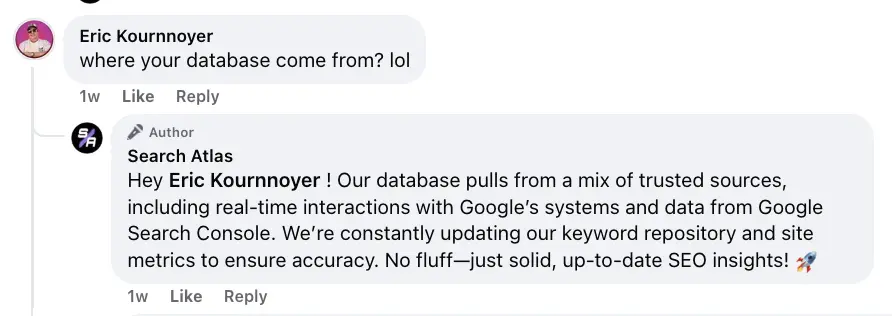
First off, it’s awesome that the Search Atlas team tracks brand mentions and actually responds to people. I don’t see that much with other tools.
This makes me think that Search Atlas probably pulls data from your Google Search Console account to track your site’s performance and give improvement tips. If I find out more about where they get their data, I’ll update this post.
Overall, I think Search Atlas is a great Ahrefs alternative for SEO. It has more features and uses AI to power its site audit tool.
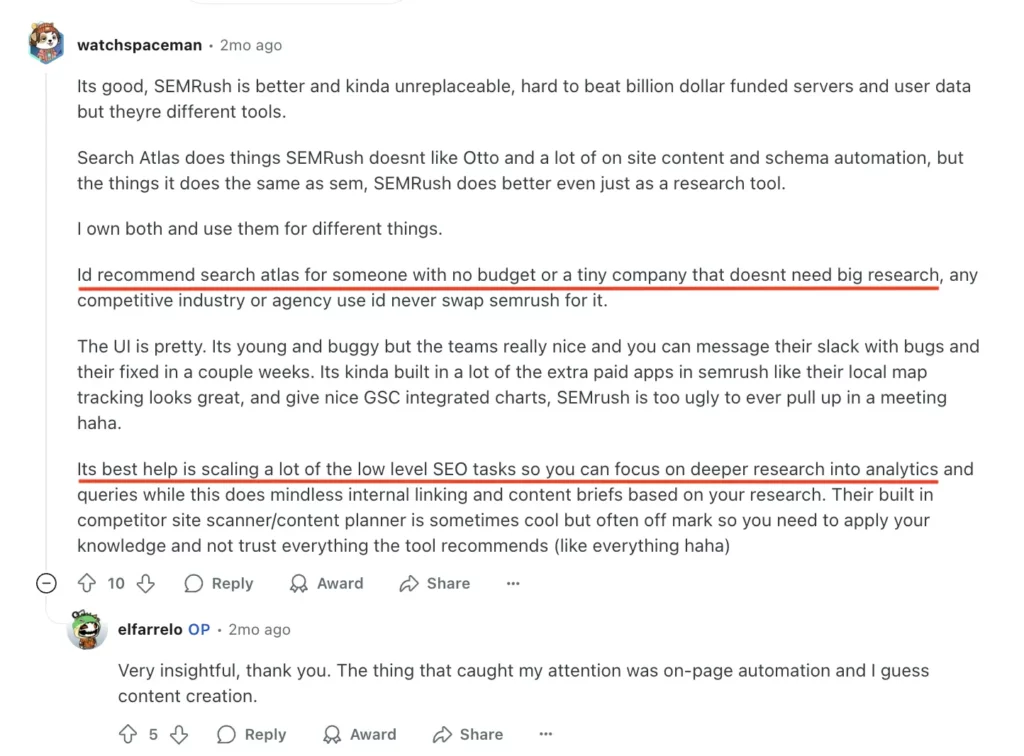
I’ve also checked what users say about Search Atlas on the web and stumbled upon a fresh Reddit thread, where one of the Reddit users shared the following:
Search Atlas gives you a 7-day free trial, but you’ll need to link a credit card to activate it. I know it’s a bit of a hassle, but it’s the only way to test the tool. I’ve paid for the tool multiple times and I can confirm they won’t charge your card during the trial.
If you cancel the trial early, you’ll lose access to the tool right away. So, it’s best to make the most of the 7 days to see if it works for your business.
Curious how Search Atlas stacks up against tools like Ahrefs or Semrush?
Try Search Atlas free for 7 days and see how this all-in-one SEO tool works.
3. SE Ranking
- Unique features: AI Overviews Tracker, Agency Success Kit, Local SEO toolkit
- Pricing: Starts at $65/month for the Essential plan
- Free trial: There’s a 14-day free trial, after which you have to upgrade to keep using the tool
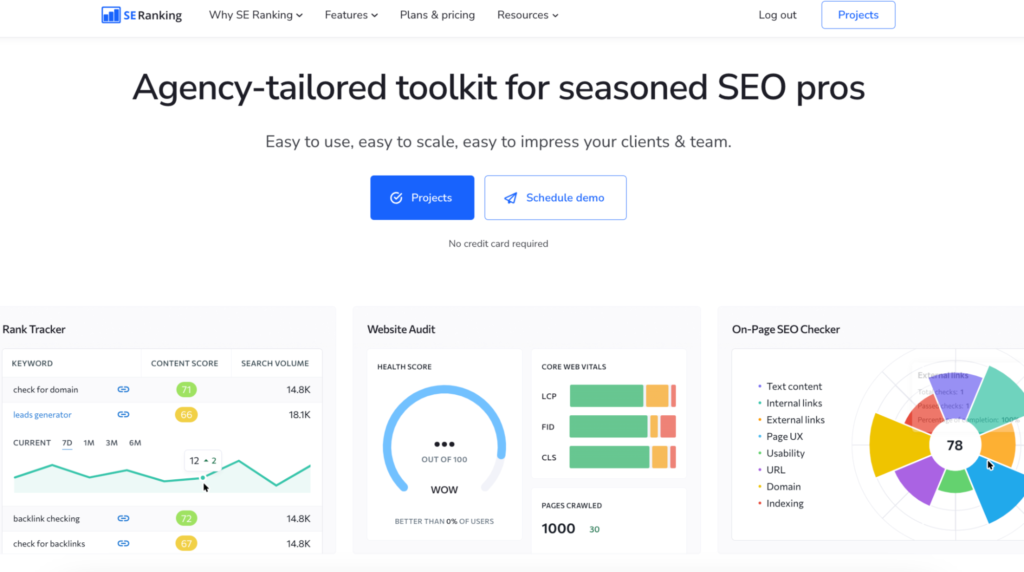
SE Ranking is an all-in-one SEO software for agencies, business owners, and SEO professionals.
It offers a wide range of tools for keyword tracking, website audits, competitor analysis, backlink monitoring, and more.
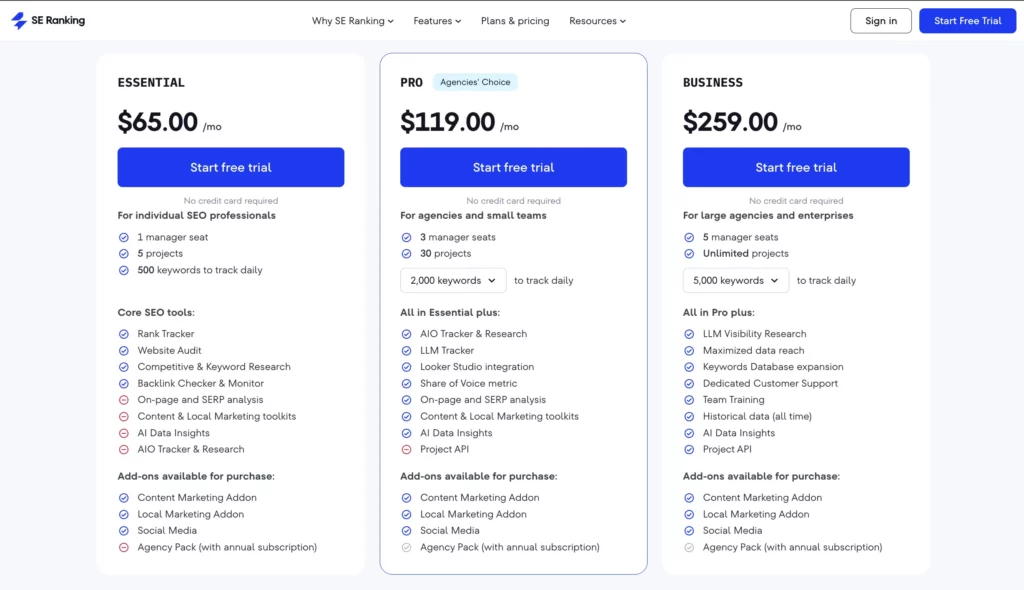
SE Ranking is a more affordable Ahrefs alternative, starting at $65/month for the core SEO tools except for AI Search, Content and Marketing toolkits, On-page and SERP analysis. To unlock additional features, you’ll have to upgrade to SE Ranking Pro ($119 monthly) or SE Ranking Business ($259 monthly).
Here’s a brief overview of SE Ranking’s key features to help you with all kinds of SEO tasks:
- Keyword Generator — It’s similar to Semrush’s Keyword Magic Tool and helps you generate keyword ideas based on your seed keyword.
- Keyword Grouper — It’s a keyword cluster tool to help you group similar keywords based on search intent.
- Keyword Rank Tracker – Monitors organic keyword positions across search engines and devices.
- AI Overviews Tracker — It’s a new tool to help you analyze AI snippets for your target keywords.
- On-Page SEO Checker – This feature helps you audit your website pages for optimization opportunities.
- Website Audit – Scans your site for technical SEO issues and recommends fixes.
- Backlink Checker – Analyzes backlink profiles for your site and competitors.
- Competitor Analysis Tool – Reveals competitors’ keywords, traffic, and ad strategies.
- AI Content Generator – This feature helps you generate and optimize content based on your target keyword. It also integrates with Google Docs.
- Local Marketing Toolkit — Helps manage local SEO campaigns to reach more customers in your target area.
- Agency Success Toolkit — Designed to help SEO agencies succeed with features like Lead Generator, SEO Reports Generator, and SEO API, to name a few.
I’ve used SE Ranking for over 6 months to track my website’s performance. Even though I currently use Ubersuggest (more about it later) and Semrush, SERanking is a decent solution if you want a more affordable tool.
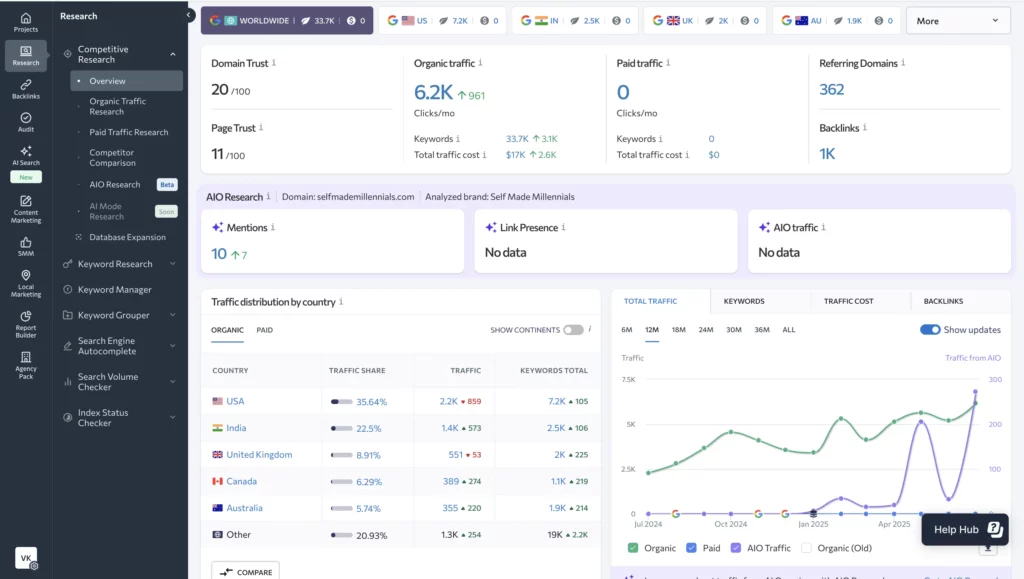
For just $65 monthly, you get access to a 4.2 billion keyword and 1.9 billion backlinks databases across 188 countries.
If you are an agency with multiple client projects, you can track up to 2,000 keywords for 30 domains with 3 user seats for just $119 monthly.
Similar to Semrush, you can manage up to 5 domains and track up to 500 keywords. The user interface reminds me of Semrus. So, if you’ve used Semrush in the past, you’ll quickly get used to the tool.
Now, let me show you my comparison of Ahrefs’ and SE Rankings’ data from October for my website.
| Category | SE Ranking | Ahrefs | Google Search Console |
|---|---|---|---|
| Organic traffic | 3,300 | 47,400 | 8,000 |
| Top 3 pages based on organic traffic | AI SEO tools AI Marketing tools Ahrefs alternatives | AI SEO tools Ahrefs alternatives AI marketing tools | AI SEO tools AI marketing tools Ahrefs alternatives |
| Organic traffic estimate for the top-ranking page | 1,150 | 15,237 | 3,570 |
| Number of keywords | 7,400 | 3,350 | |
| Referring domains | 612 | 453 | |
| Number of backlinks | 2,000 | 1,300 |
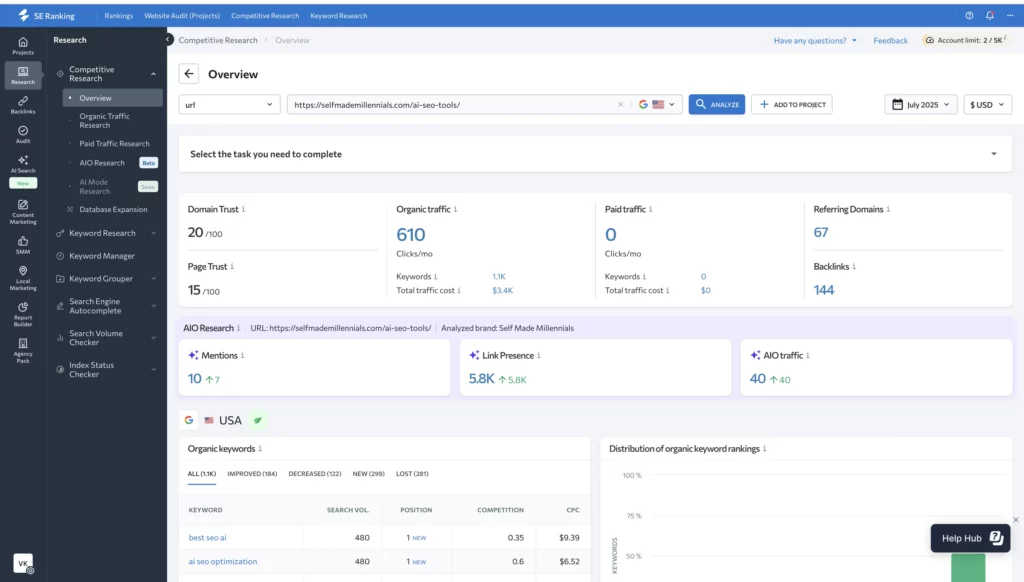
Just like with Ahrefs, the numbers you see in SE Ranking don’t quite match what’s shown in Google Search Console. It’s still useful as a reference, but keep in mind that your competitors might actually be doing better than what SE Ranking shows.
I was honestly surprised to see the low organic traffic estimate, only 610 visits a month for my top post on AI SEO tools.
On the other side, the backlink data was pretty spot on and almost identical to what Ahrefs shows.
If you want to try SE Ranking, keep in mind that it doesn’t have a free plan.
Once your 14-day free trial ends, you’ll lose access to all your data. That could be a big deal for your business.
The Agency Success Pack is only available if you upgrade to either the SERanking Pro ($119/month) or Business ($259/month) plans, and you’ll need to commit to a yearly plan.
The good news? You save 20% with the annual subscription.
When it comes to historical data on keywords and domains, you’ll only get 3 months of data with the Pro plan. If you need full historical data, you’ll need the Business plan. I know this could be a bit confusing. From what I’ve seen, having access to historical data is key for analyzing performance and data trends.
4. Writesonic
- Unique features: SEO Checker and Optimizer, Humanizer, Botsonic to create chatbots for your website.
- Pricing: Starts at $49 per month per user seat and one project.
- Free trial: 7-day free trial; no credit card required.
Writesonic is an AI-powered tool for all kinds of SEO content tasks ,from researching writing topics, editing, to automatic content publishing and performance tracking.
It’s like Ahrefs’ AI Content Helper and AI Content Grader, but better! I’d compare Writesonic to Semrush’s Content Toolkit.
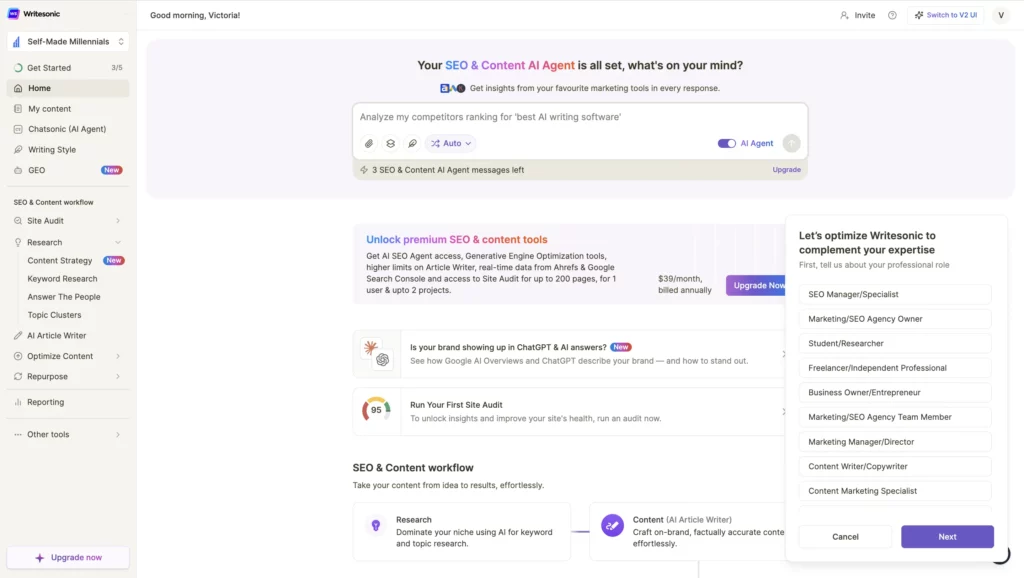
Here’s what you can do with Writesonic:
- You can teach Writesonic’s bot how you write, including your tone, style, and voice. So, it creates content that actually sounds like you.
- Track how your brand shows up across LLMs like ChatGPT, Perplexity.ai, and AI Overviews, including visibility, rankings, and sentiment.
- Run a free site audit for up to 100 pages. If you’re on a paid plan, you can check bigger sites, such as 200 pages, and more.
- Get custom content ideas tailored for your website and create an SEO strategy around them.
- Do keyword research and find topics your audience is actively searching for, kind of like what Answer the Public does.
- Research keyword clusters to plan out pillar pages and supporting articles.
- Create different types of content like listicles, how-to guides, or news-style articles.
- Generate and customize outlines.
- Optimize content for rankings with SEO Checker and Optimizer
- Do competitor research, compare your content performance to your competitors, and get improvement recommendations.
- Rewrite or humanize AI-generated content.
- Look into which keywords and pages perform best on your site.
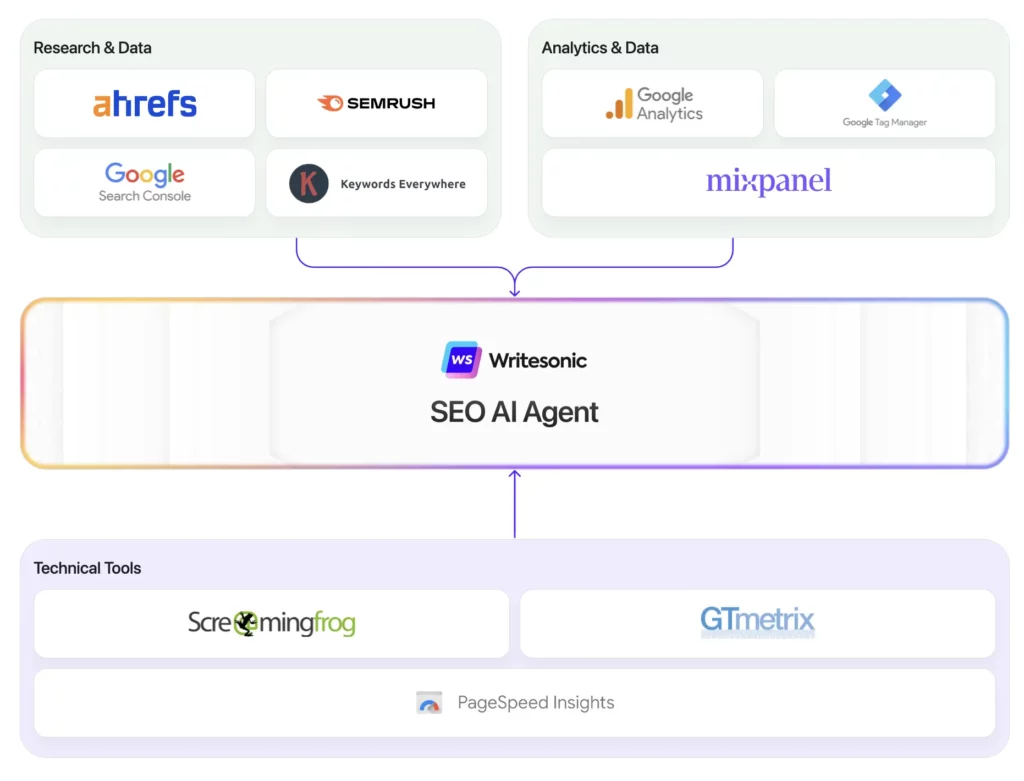
One thing that really caught my eye is that Writesonic connects with tools like Ahrefs, Semrush, Google Analytics, and Google Search Console to pull in keyword data, domain overview, and site audit insights.
Even if you don’t have your own Semrush or Ahrefs account, you still get access to their insights. Pretty handy!
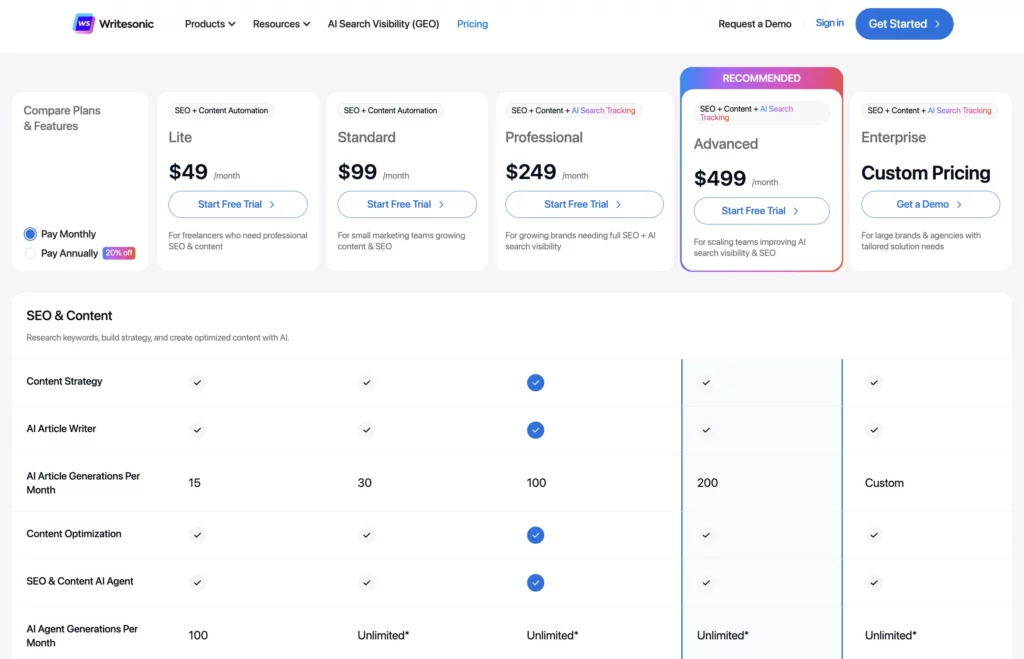
If you’re looking for a more budget-friendly alternative to Ahrefs, Writesonic might be worth checking out. It starts at $49/month or $39/month if you go with the annual plan.
I believe Writesonic is a content-focused SEO tool, while Ahrefs is more of an all-in-one SEO tool. But if your main focus is content SEO, Writesonic could be a solid alternative.
Keep in mind that the Lite plan doesn’t include the AI Toolkit. You’ll need the Standard plan or higher for that.
5. Ubersuggest
- Unique features: Top SEO opportunities report, Chrome extension, Keywords by Traffic report
- Pricing: Starts at $29 monthly or $290 lifetime to manage one domain
- Free trial: There’s a 7-day free trial and a limited free plan.
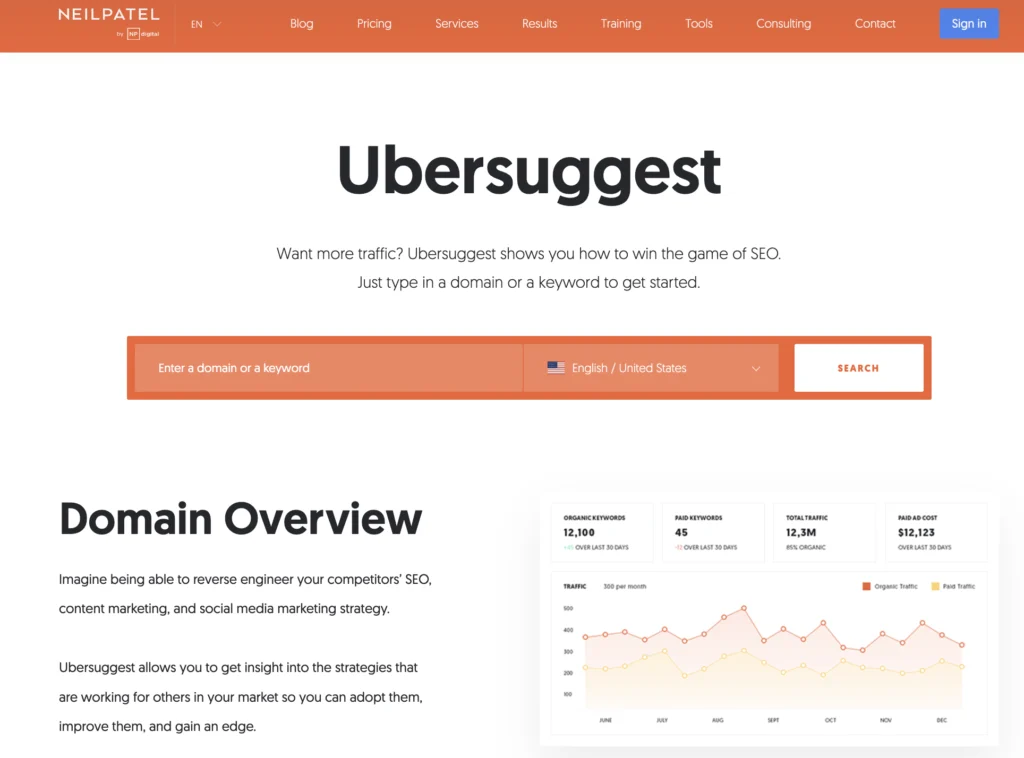
For $290, you could get one or a few monthly subscriptions to SEO tools. But for Ubersuggest, that’s the price for a lifetime plan if you’re managing just one domain.
I grabbed the Individual plan in December 2024 to track my site’s performance, keep an eye on competitors, and do keyword research. I’ve been using it every day since.
Ubersuggest is a solid alternative to Ahrefs, especially for small businesses and hobbyists who need a budget-friendly option. Ubersuggest was bought by Neil Patel in 2017 with a vision of creating an SEO tool that could rival more expensive options.
Here’s what you get for $29 a month or $290 lifetime:
- One user seat to manage one domain
- 150 searches daily
- Track 5 competitors
- Analyze competitors’ top-ranking pages and keywords
- Scan 1,000 pages per domain
- Access up to 20,000 keyword suggestions
- Get 200 content ideas
- Track up to 2,000 backlinks from the past 3 years
- See new and lost backlinks over the last 30 days
- SEO training and support
Ubersuggest is good at providing keyword rankings and updates regularly. For some of my top-ranking keywords, it actually gives more accurate updates than Ahrefs.
The Individual plan lets you track up to 125 keywords for one domain, but if you need more, you can purchase an add-on for 250 keywords for just $5 a month.
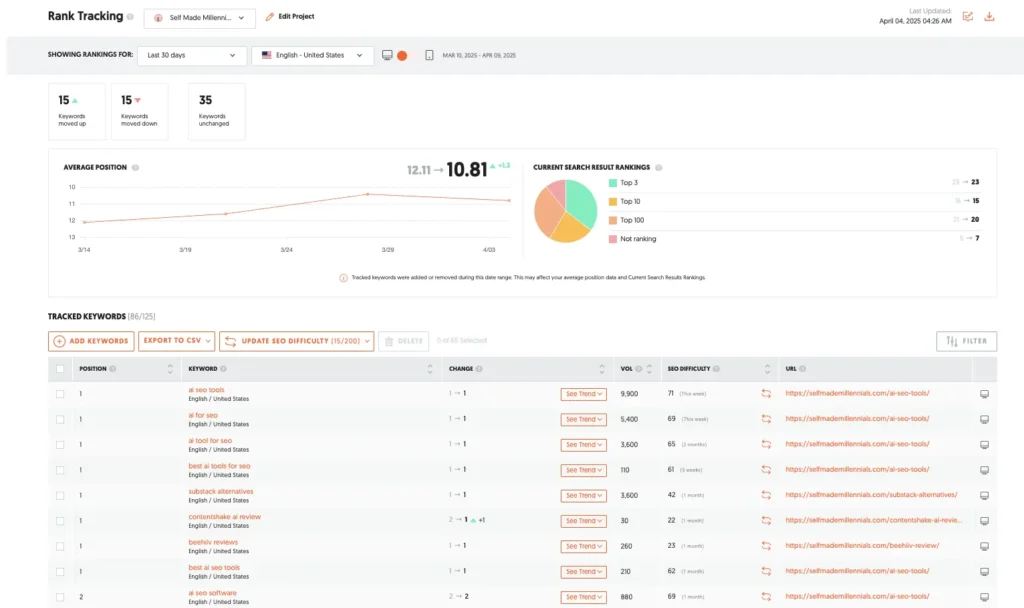
Unlike Ahrefs, Ubersuggest offers both Keyword Overview and Keyword Ideas tools to generate keywords based on your seed keyword.
You can use Ubersuggest’s Keyword Research Toolkit to check out your keyword ideas and find the best keywords for your target countries. There are filters to help you narrow the keyword list down to the most relevant keywords.
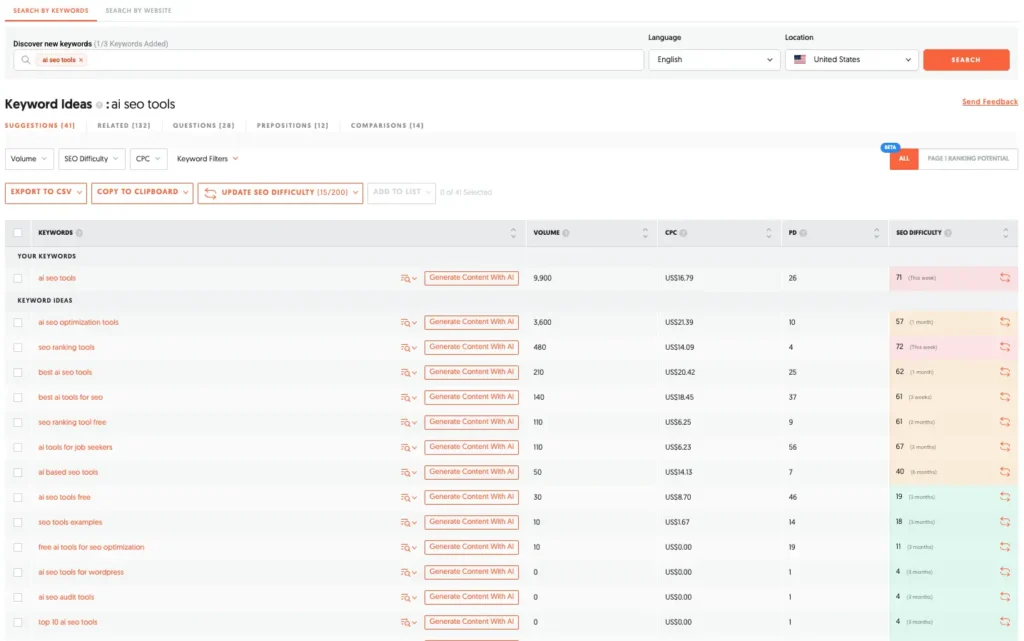
However, I’m not too confident about Ubersuggest’s keyword metrics. I feel like their numbers are often too high.
For example, Ubersuggest shows 9,900 monthly searches for “AI SEO tools,” but Ahrefs shows just 2,200. This makes more sense because my article ranks #1 on Google for that keyword (and many related keywords) and gets around 3–5k visits each month.
On the other hand, Ubersuggest’s keyword difficulty estimates seem pretty accurate, at least when I compare them to Ahrefs and Semrush.
I was curious where Ubersuggest gets its data, so I came across their post explaining how they estimate organic traffic. Here’s what they consider:
- “Keyword Analysis: We evaluate the monthly search volume of each keyword in our database.
- Rankings and Websites: We analyze website rankings for these keywords and their respective positions.
- Position-Based CTR Analysis: We assess the typical CTR for these positions.
- Comprehensive Traffic Calculation: We aggregate this data with additional information, such as the traffic of each page and, if applicable, data from other countries.”
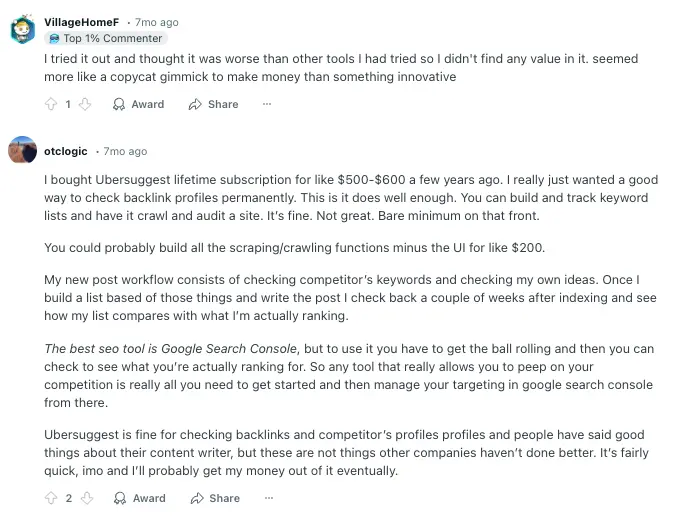
Even though people have mixed opinions about Ubersuggest on Reddit, I agree with one user who said it’s a solid tool for tracking. If you need SEO software for small businesses or have a side-project website, it’s definitely worth using.
What’s the best Ahrefs alternative?
After years of DIY SEO and working with lots of different SEO tools, I could say I mainly use Semrush. However, this hasn’t always been the case. Additionally, it took me a lot of time to test the existing solutions and identify those I can rely on based on their data accuracy and features.
If you’ve just started looking for an alternative to Ahrefs, I suggest asking yourself, “What exactly do you need it for?”
Not all SEO tools do the same thing well. Some are great for niche keyword research, others shine when it comes to backlink tracking, and a few are better for content ideas.
Before jumping into another tool, think about the tasks you do most often. Are you focused on growing organic traffic, spying on competitors, or building links?
Your daily SEO workflow should guide your decision. It also helps to think about how experienced you are—some tools are beginner-friendly, while others, like Screaming Frog, will take time to master.
And, of course, budget plays a role, especially if you’re a freelancer or small business owner. Instead of asking, “What’s the best?” ask, “What’s the best for me right now?” That mindset shift makes the choice a whole lot easier.

Join the newsletter for actionable SEO tips, case studies, and a behind-the-scenes look at my affiliate marketing journey.
No spam. Unsubscribe anytime.
0 Responses
Thanks for sharing nice post